A travel agent’s inside look at the ports, highlights, and hidden gems on one of Viking’s most beloved river routes
If you’ve been searching for a detailed breakdown of the Viking Danube cruise itinerary from Budapest to Amsterdam, you’ve landed in the right place. I’m Gretchen, and I’ve helped countless clients plan this exact sailing. It’s one of my personal favorites to book — and once you see what’s waiting at each stop, you’ll understand why.
This isn’t just a list of cities. I’m going to tell you what’s actually worth your time at each port, what my clients rave about after they’re home, and where I think Viking absolutely nails the experience.
Let’s go port by port.
A Quick Note on This Itinerary
The Budapest to Amsterdam route is technically Viking’s Grand European Tour — a 15-day sailing that travels the Danube, the Main-Danube Canal, the Main River, and finally the Rhine. It covers four countries and some of the most stunning river scenery in the world.
Searches I get constantly for this route:
- “How many days is the Viking Grand European Tour?”
- “What cities does the Viking Danube to Amsterdam cruise stop at?”
- “Is the Viking Grand European Tour worth it for first-timers?”
- “What are the best ports on the Viking Budapest to Amsterdam cruise?”
All answered below. Let’s get into it.
Budapest, Hungary — Your Embarkation City
The highlight: Don’t just show up the day of boarding. I always tell my clients to arrive in Budapest at least two days early — this city deserves it. Budapest is arguably one of the most beautiful capitals in Europe, and arriving tired from a transatlantic flight and immediately boarding a ship means you’ll miss it entirely.
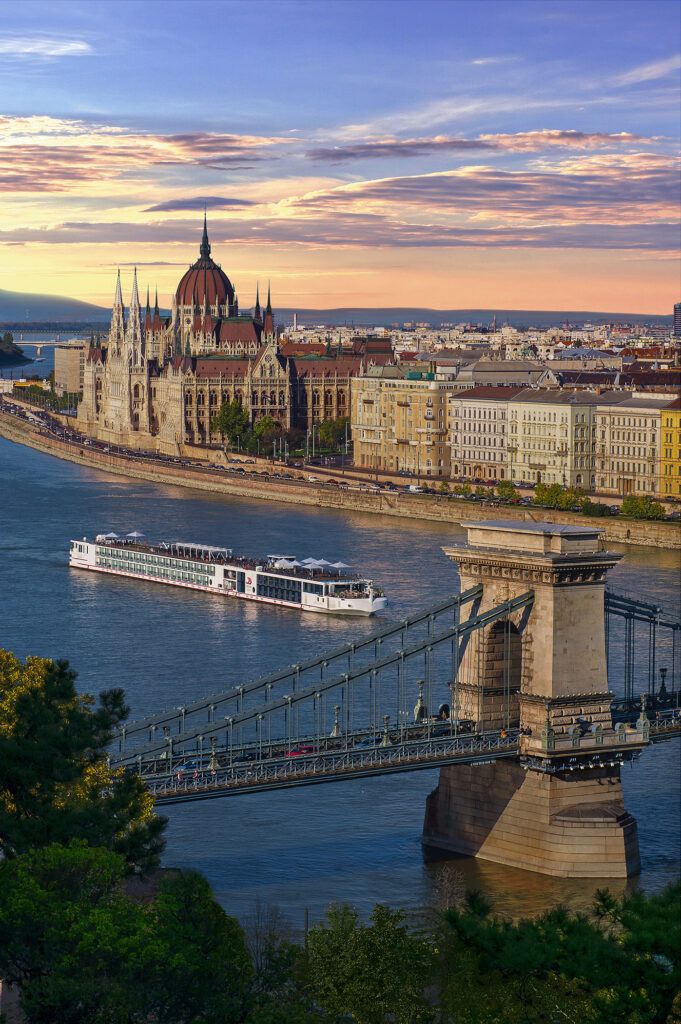
The must-sees before you sail: the illuminated Parliament building at night (genuinely one of the most stunning sights in Europe), a soak in the famous Széchenyi thermal baths, and a walk across the Chain Bridge at sunset. The ruin bars in the Jewish Quarter are unlike anything you’ll find anywhere else.
What my clients say: “We almost didn’t stay extra days in Budapest. It would have been our biggest regret of the whole trip.”
My tip: Book a pre-cruise Budapest hotel package through me and I’ll make sure you’re staying in the right neighborhood — within walking distance of everything, not out by the airport.
Bratislava, Slovakia — The Underrated Gem
The highlight: Bratislava gets overlooked because it’s sandwiched between Budapest and Vienna, but I genuinely love this stop. The old town is compact, walkable, and completely charming — cobblestone streets, pastel-colored buildings, and almost no tourist crowds compared to its neighbors.
Viking’s included shore excursion here covers Bratislava Castle (the views over the Danube are fantastic) and a walking tour of the old town. It’s a shorter port day, so the included excursion is actually the right call here — you don’t need a full day.
Long-tail searches that lead clients to me for this stop: “What is there to do in Bratislava on a Viking river cruise” and “Is Bratislava worth exploring on the Grand European Tour.” The answer is yes — just don’t try to cram too much in.
My tip: Grab a coffee and a slice of Bratislava cake at one of the old town cafés before reboarding. It’s one of those small moments my clients always mention.
Vienna, Austria — The Crown Jewel of the Danube
The highlight: If there’s one port on this itinerary where you’ll wish you had more time, it’s Vienna. Viking typically gives you a full day here, and it still feels like not enough. The included shore excursion covers the grand Ringstrasse boulevard, the Opera House, and St. Stephen’s Cathedral — a genuinely impressive overview of the city.
But here’s what I always tell clients who love classical music: check whether a concert or opera performance aligns with your sailing date before you book. Vienna is the live classical music capital of the world, and an evening at the Vienna State Opera or a Mozart concert in one of the palace halls is an experience that’s hard to put into words.
What my clients rave about: The Naschmarkt — Vienna’s famous open-air market — for lunch. Schnitzel, fresh pastries, and local cheeses. Absolute heaven.
My tip: Viking offers an optional “Privileged Access” evening concert excursion in Vienna on some sailings. If it’s available on yours, take it. It’s one of the most memorable add-ons I’ve ever recommended.
Krems & the Wachau Valley, Austria — Pure Scenic Beauty
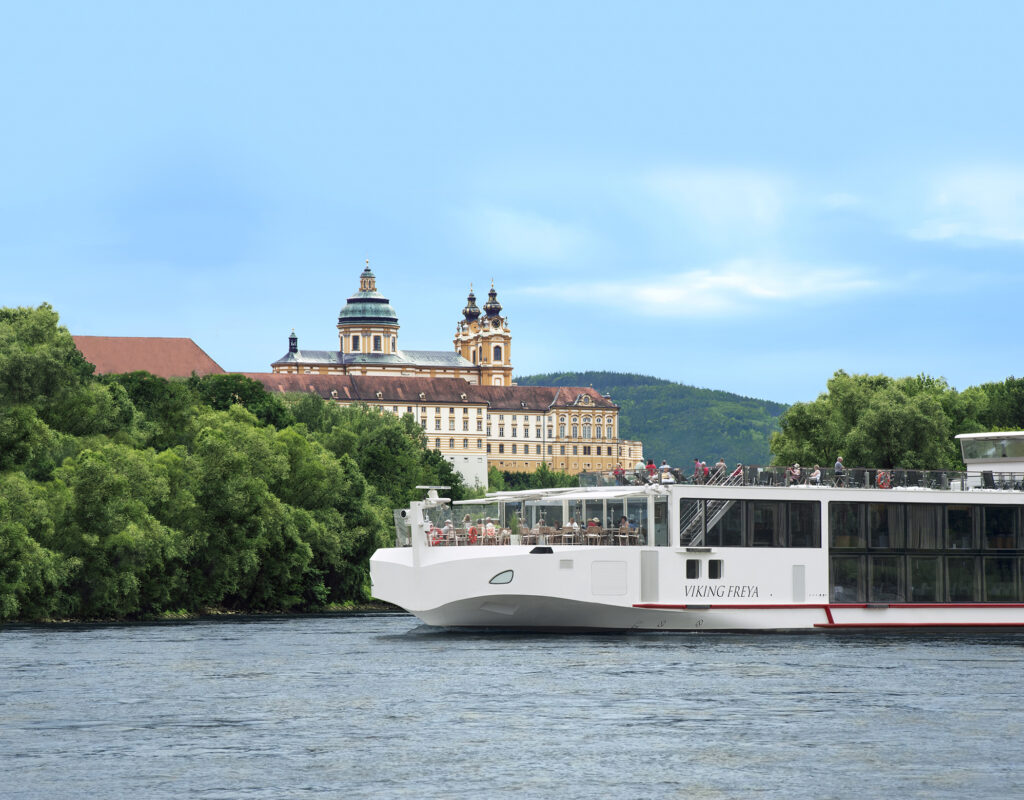
The highlight: The Wachau Valley stretch of the Danube is a UNESCO World Heritage Site, and the sailing through it is one of the most visually stunning moments of the entire cruise. Vineyard-covered hillsides, medieval abbeys perched on clifftops, and tiny riverside villages that look frozen in the 16th century.
Krems itself is a lovely, relaxed wine town. Viking’s excursion options here often include an apricot brandy tasting (the Wachau is famous for its apricots as much as its Grüner Veltliner wine) and a visit to Dürnstein, the charming blue-steepled village where Richard the Lionheart was once imprisoned.
Long-tail searches I see for this stop: “What is the Wachau Valley like on a Viking river cruise” and “Viking Krems shore excursion — is it worth it.”
My tip: If you can, be on deck as the ship sails through the Wachau in the early morning. Set an alarm. The light at that hour over the vineyards is something you’ll remember for the rest of your life.
Passau, Germany — Where Three Rivers Meet
The highlight: Passau is one of those port stops that surprises everyone. It sits at the confluence of three rivers — the Danube, the Inn, and the Ilz — and the old town is built on a narrow peninsula between them. The geography alone makes it unlike any city you’ve ever visited.
St. Stephen’s Cathedral here houses the largest pipe organ in the world (17,774 pipes — yes, really), and if you time it right, you can catch a midday organ concert. The Baroque architecture throughout the old town is stunning.
What my clients say: “Passau was the stop I knew the least about going in and ended up loving the most.”
My tip: Walk up to the Veste Oberhaus fortress for panoramic views over all three rivers and the rooftops of Passau. It’s a bit of a hike but absolutely worth it — and not everyone makes the effort, so it feels like your own private viewpoint.
Regensburg, Germany — Medieval Magic
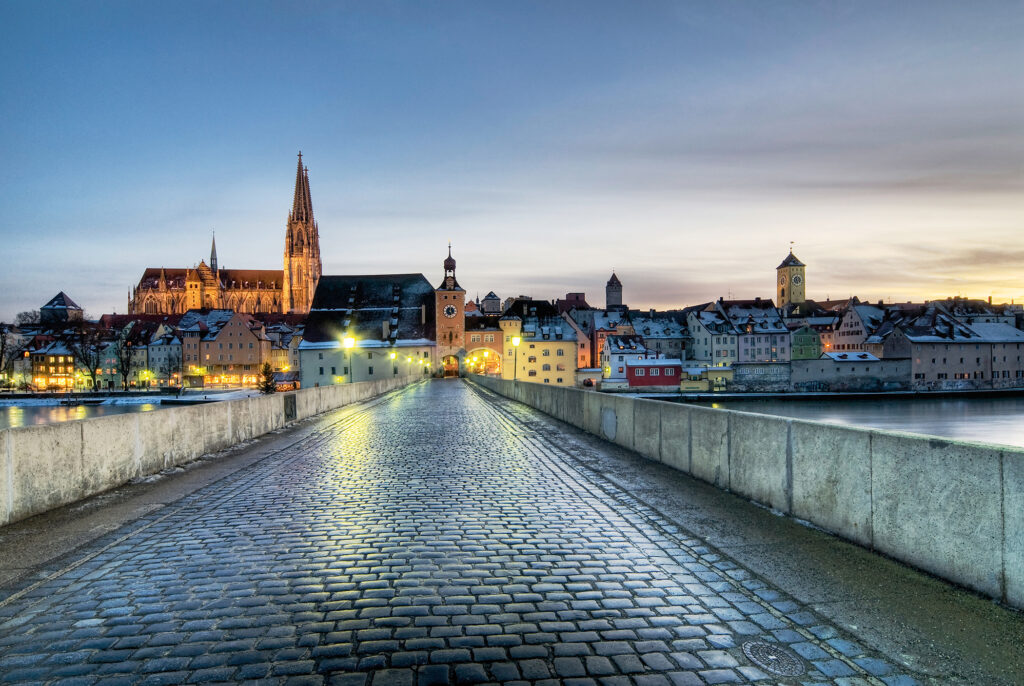
The highlight: Regensburg is one of the best-preserved medieval cities in all of Europe — and it’s a UNESCO World Heritage Site to prove it. Unlike many German cities that were heavily bombed in World War II, Regensburg emerged almost entirely intact, so what you’re walking through is genuinely 13th and 14th century architecture.
The Stone Bridge, built in 1135, is still in use today and offers one of the best views in the city. The historic sausage kitchen right next to the bridge has been serving the same grilled sausages since the 12th century — I tell every single client to eat there. No exceptions.
Long-tail searches for this stop: “What to do in Regensburg on a Viking river cruise” and “Is Regensburg worth exploring on the Grand European Tour.”
My tip: This is a great port for independent exploring. The old town is compact and walkable, and Viking’s included excursion here is solid — but if you’re a history lover, consider the optional excursion to Nuremberg instead, which is a Viking add-on on some sailings.
Nuremberg, Germany — History and Heart
The highlight: Nuremberg is typically offered as an optional excursion from the Regensburg port day, and I almost always recommend it to clients who are even mildly interested in 20th century history. The Nazi party rally grounds, the Documentation Center, and the Palace of Justice where the Nuremberg Trials were held are sobering, important, and remarkably well-interpreted.
The city itself is also beautiful — a reconstructed medieval old town with a castle, Christmas market (in season), and the best bratwurst in Bavaria.
My tip: This is a long day if you’re doing the full Nuremberg excursion from Regensburg, so wear comfortable shoes and pace yourself. But it’s one of the most meaningful shore excursions on the entire itinerary.
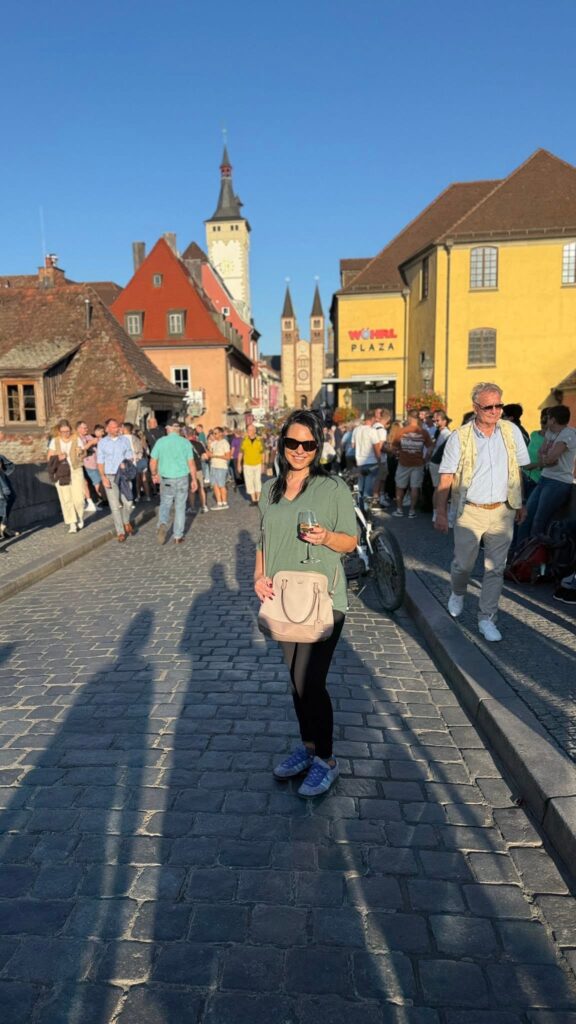
Würzburg, Germany — Wine Country and Baroque Grandeur
The highlight: Würzburg sits at the heart of the Franconian wine region and is home to one of the most spectacular Baroque palaces in Europe — the Würzburg Residence, a UNESCO World Heritage Site with a ceiling fresco by Tiepolo that has to be seen in person to be believed.
Viking’s included excursion covers the Residence beautifully. But what I always add: take an hour to walk the old town and find a local Weinstube (wine tavern) to try Franconian Silvaner wine. It’s the region’s signature grape and you simply won’t find it this fresh anywhere else.
Long-tail searches: “What is Würzburg like on a Viking river cruise” and “Is the Würzburg Residence worth visiting.”
My tip: The vineyard terraces above the city are gorgeous in fall. If you’re sailing September or October, this is one of the most beautiful port days of the entire trip.
Rüdesheim & the Rhine Gorge, Germany — Castle Country
The highlight: Welcome to the Rhine. After sailing the Main-Danube Canal, the ship joins the Rhine at Mainz and heads north toward Amsterdam — and the Rhine Gorge section between Rüdesheim and Koblenz is pure, unfiltered fairy tale scenery. More castles per mile than anywhere else in Europe, dramatic cliffs, and the famous Lorelei Rock.
Rüdesheim itself is charming and a little touristy — the Drosselgasse wine lane is fun for an hour — but the real star here is the scenery as the ship sails north. Be on deck.
What my clients say: “We thought the Wachau was beautiful. Then we hit the Rhine Gorge and realized we hadn’t seen anything yet.”
My tip: Viking sometimes does a special evening sailing through part of the Rhine Gorge with wine on deck. If your sailing includes this, do not miss it.
Cologne, Germany — Cathedrals and Culture
The highlight: Cologne’s Gothic cathedral is one of the most jaw-dropping pieces of architecture in the world — it took over 600 years to complete and dominates the skyline from every angle. The included excursion covers it well, but I always encourage clients to go inside, climb the tower if they’re able, and take their time.
The old town along the Rhine is lively and fun, and Cologne is famous for its Kölsch beer — a light, crisp style served in small glasses at virtually every bar and restaurant. It’s a local ritual and a delightful one.
Long-tail searches: “What to do in Cologne on a Viking river cruise” and “How long does Viking spend in Cologne.”
My tip: If you have free time after the excursion, the Chocolate Museum (Schokoladenmuseum) right on the Rhine is genuinely fun and my clients with a sweet tooth always love it.
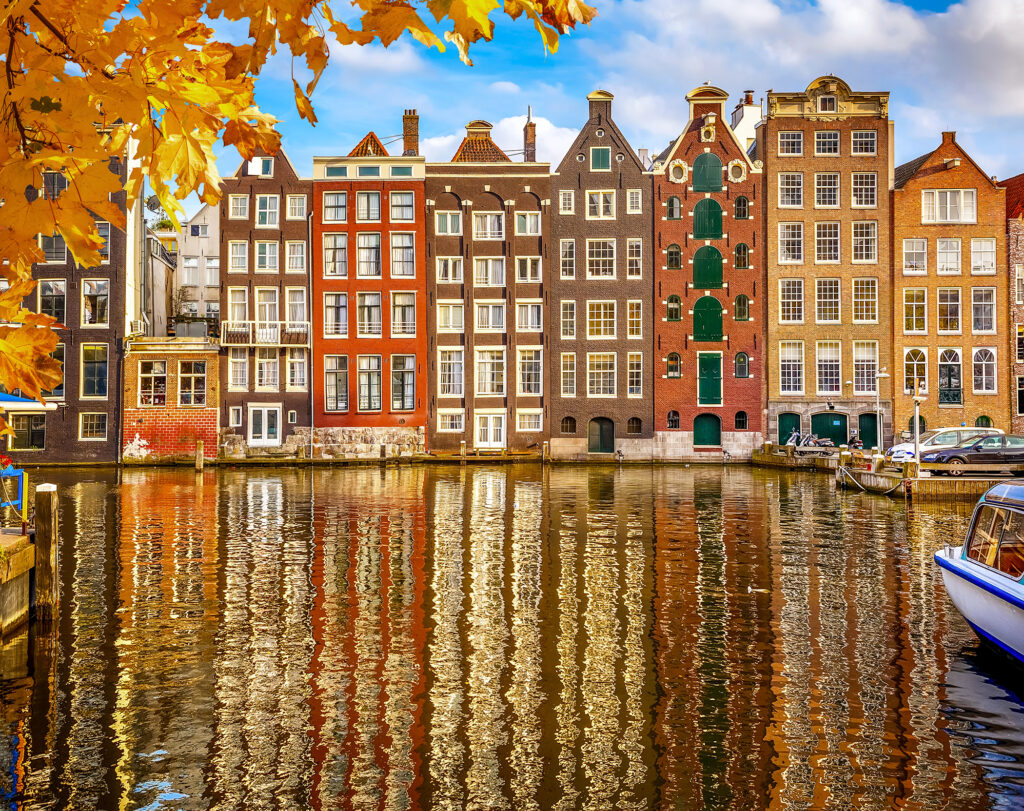
Amsterdam, Netherlands — Your Grand Finale
The highlight: Amsterdam is a worthy ending to an extraordinary journey. Viking typically arrives in Amsterdam with at least a full day in port, and I always recommend staying an extra two or three nights after disembarkation — just like Budapest at the start, this city deserves more than a rushed goodbye.
The canal ring, the Anne Frank House (book tickets months in advance — this is not an exaggeration), the Rijksmuseum with Rembrandt’s Night Watch, the Jordaan neighborhood for boutique shopping and café culture — Amsterdam rewards slow exploration.
Long-tail searches: “What to do after Viking river cruise ends in Amsterdam” and “How many days to spend in Amsterdam after Grand European Tour.”
My tip: If you’re sailing in April or early May, the Keukenhof tulip gardens are about 45 minutes from Amsterdam and are one of the most spectacular things I’ve ever seen. Book entry tickets early — they sell out.
Is the Viking Budapest to Amsterdam Cruise Worth It?
Genuinely, yes — and I say that as someone who has booked this itinerary for clients ranging from honeymooners to retired couples celebrating 40th anniversaries. The combination of the Danube’s grand capitals, the Bavarian river towns, the Rhine Gorge scenery, and Amsterdam as a send-off makes this one of the most well-rounded river cruise itineraries in the world.
The question I get most often after clients return: “When can we go back?”
Ready to Start Planning?
This is exactly the kind of itinerary where having a travel agent in your corner makes a real difference — knowing which cabin faces the best scenery, which shore excursions are genuinely worth adding, and how to build in the pre- and post-cruise time that takes a great trip and makes it unforgettable.
I’d love to help you plan yours. Fill out my trip inquiry form and I’ll be in touch within 24 hours.