You’ve compared itineraries. You’ve narrowed down the ship. Now comes the question that can genuinely make or break your trip: which cabin do you actually book?
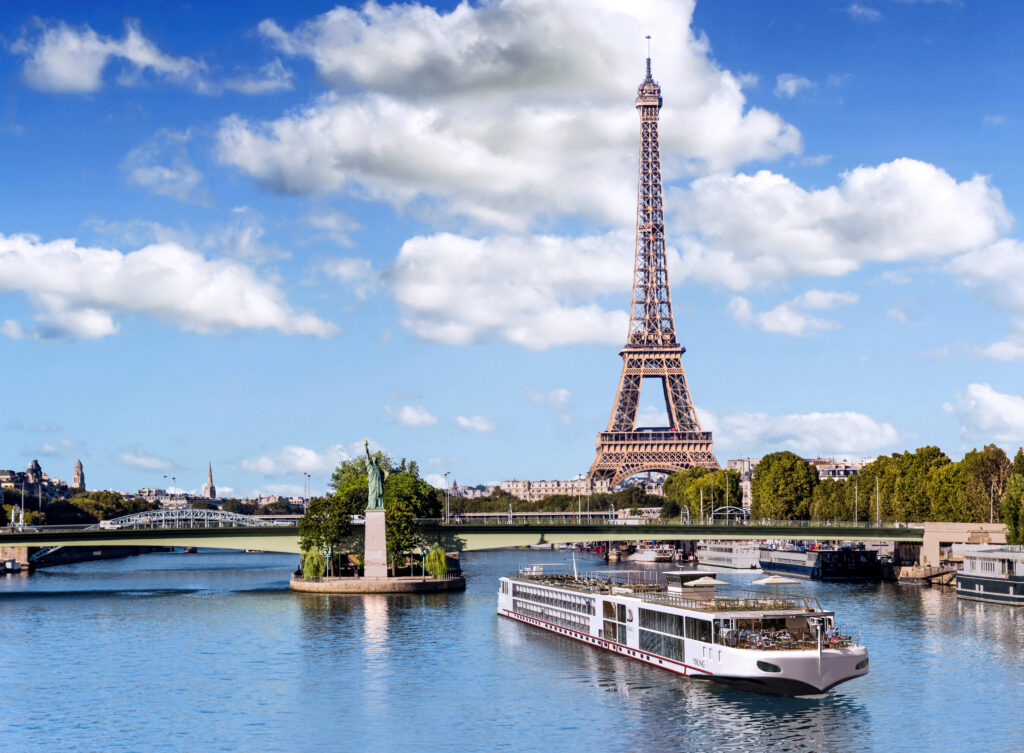
On a 443-foot Viking Longship gliding past the vineyards of the Moselle Valley, the difference between a Category E stateroom and a top-deck Veranda Suite isn’t just about square footage. It’s about whether you wake up to the spires of Budapest at eye level or to a porthole view of a dock wall. It’s about whether the ambient engine hum lulls you to sleep or keeps you counting ceiling tiles at 2 a.m.
This guide is for travelers who are done with vague advice. Whether you’re a solo traveler booking a single cabin on the Douro, a luxury-focused couple debating a suite upgrade on the Mekong, or a first-timer trying to decode the difference between a French balcony and a full balcony on the Danube — this is your definitive resource.
French Balcony vs. Full Balcony on River Cruise Ships: Which Is Actually Better for Scenic Routes Like the Danube and Rhine?
This is the most searched, most debated, and most misunderstood cabin feature in river cruising.
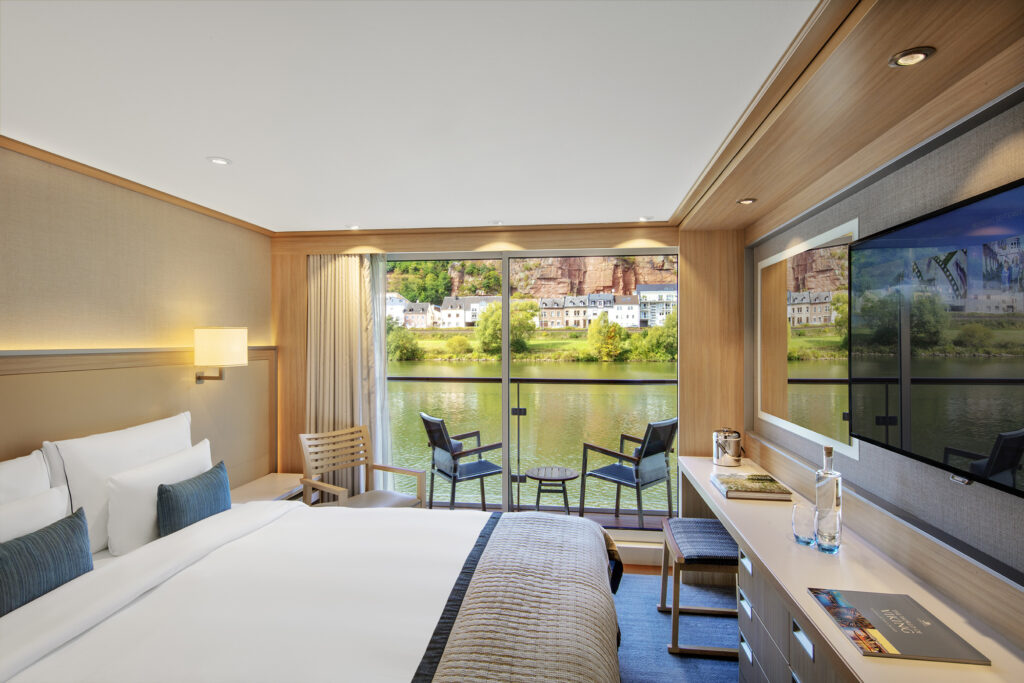
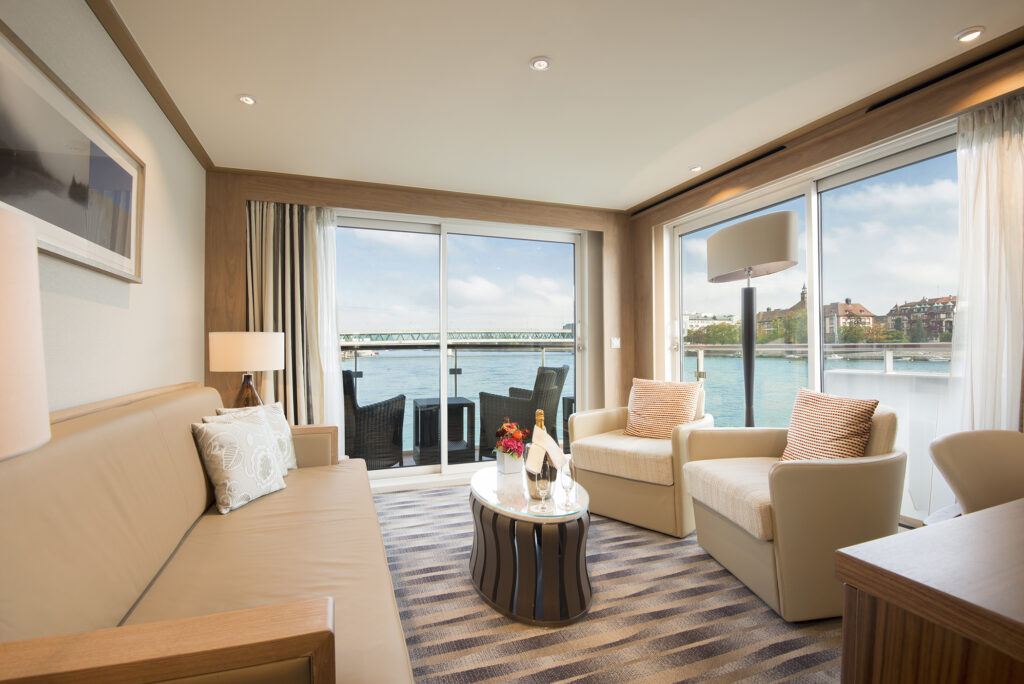
A French balcony (also called a Juliet balcony) is a floor-to-ceiling sliding glass door that opens inward — or not at all — with a safety railing at the threshold. You cannot step outside. There is no outdoor furniture, no deck space, no room to stand with a glass of wine. What you get is fresh air, ambient river sounds, and an unobstructed vertical view of the scenery passing by. French balconies dominate mid-tier categories on Viking River Cruises, Avalon Waterways, and AmaWaterways, typically on Deck 2.
A full balcony — marketed as a “veranda,” “panorama balcony,” or “outside deck” depending on the line — gives you actual outdoor square footage. Two chairs, a small table, and 30 to 60+ square feet of private outside space. These are almost exclusively found on the top deck and command a premium of $200–$600 more per person on a 7-night cruise.
Choose a French balcony if you cruise primarily for the itinerary, you’re on a budget-conscious Danube or Rhine sailing, or you plan to spend scenic hours in the main lounge or on the sun deck anyway.
Choose a full balcony if you’re a morning-coffee-outside traveler, you’re doing a wine-focused Douro Valley or Bordeaux itinerary where vineyard scenery is the entire point, or you’re celebrating a milestone and the private outdoor experience matters.
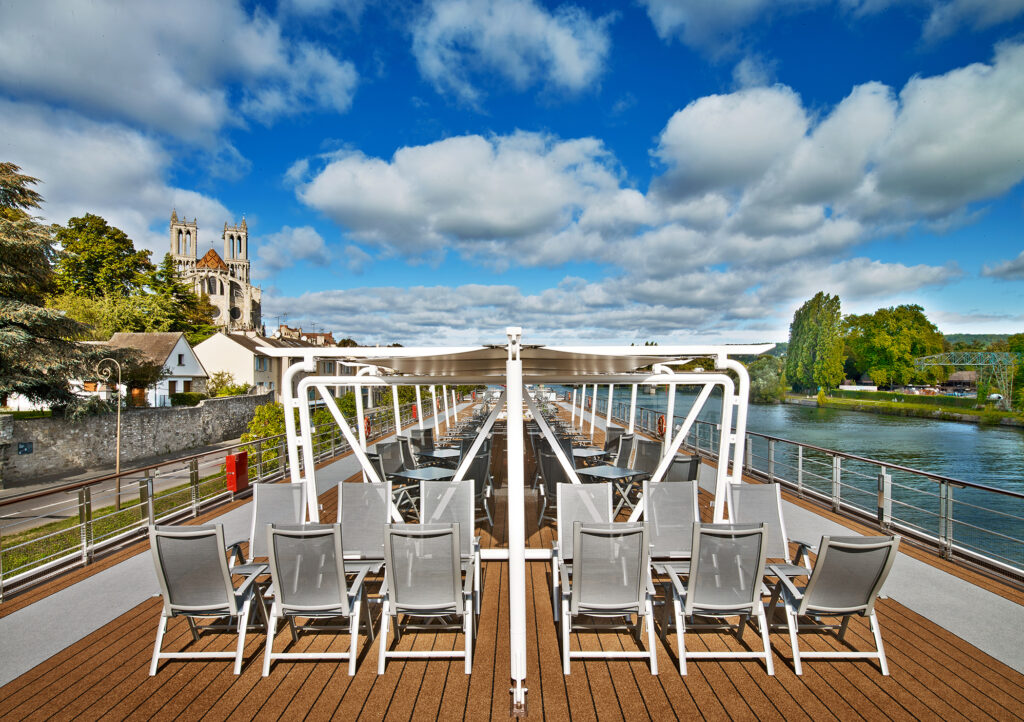
One honest caveat for Danube and Rhine travelers: many of the most photogenic moments — Melk Abbey, the Lorelei Rock, the Wachau Valley — happen quickly and at unpredictable hours. The free sun deck will often outperform any balcony for these moments.
Lower Deck River Cruise Cabins: Are the Trade-Offs Worth the Savings for First-Time Passengers?
Lower deck cabins (Deck 1, or the “main deck”) are consistently the least expensive category on any river cruise ship. The question is whether the savings justify what you give up.
The primary trade-off is the view. Lower deck windows sit closest to the waterline, looking directly out at riverbanks, dock infrastructure, or passing vessel hulls. In some ports, windows must remain covered for privacy — a real issue on the Rhine’s busy commercial stretches.
The second trade-off is noise. Lower decks sit physically closest to the engine room and bow thruster. On older vessels or ships with weaker acoustic insulation, this is genuinely disruptive. Specific ships to research before booking a lower deck cabin: Viking’s pre-2012 “Classic” class vessels, certain Scenic ships on the Mekong, and some Emerald Waterways ships on the Danube.
The third issue is natural light. Lower deck cabins receive dramatically less ambient daylight — worth considering if you’re sensitive to sleep environment or tend to spend time in your cabin between excursions.
When a lower deck cabin makes sense: travelers with mobility considerations benefit from the shorter distance to the gangway. Budget-focused travelers on itinerary-heavy sailings — particularly Rhine Christmas Markets cruises where you’re in port most of the day — may find the savings of $150–$400 per person entirely reasonable.
Pro tip: on AmaWaterways and Avalon ships, a specific port-side or starboard-side request often matters more than deck level for optimal scenery on routes like the Upper Rhine or Douro.
Midship vs. Forward vs. Aft Cabins on River Cruise Ships: Which Location Is Best for Quiet Nights and Better Views?
On ocean ships, midship is the stability recommendation. On river cruise ships — where rolling motion is essentially non-existent — the calculation is completely different. What matters instead is noise and vibration.
Midship cabins sit furthest from both the engine room (aft) and the bow thruster (forward), making them the quietest option on most ships. Viking Longships and AmaWaterways vessels have standardized engineering layouts that make this consistently true. If noise sensitivity is your primary concern, midship is the answer.
Forward cabins appeal to travelers who want the “approaching landscape” view — especially meaningful on narrower rivers like the Douro or Dordogne where the scenery ahead feels cinematic. The trade-off: bow thrusters used for docking generate significant low-frequency vibration during early-morning arrivals, typically between 5 and 7 a.m. Light sleepers should factor this in.
Aft cabins are the most acoustically challenging on nearly every ship. Engine rooms sit at the stern, generating a consistent low-level hum that ranges from barely perceptible to genuinely disruptive depending on ship age. The one exception: certain aft upper-deck suites on the AmaMagna and select Tauck vessels are positioned for panoramic stern-facing views with outdoor terrace space — a genuinely premium configuration worth seeking out.
Best Single Cabins on River Cruise Ships: Top-Rated Options for Solo Travelers Who Don’t Want to Pay a Double Supplement
Solo travelers face a specific and frustrating challenge: most lines charge a single supplement of 50–100% of the per-person double occupancy rate. A small number of lines are changing this.
Viking River Cruises offers solo staterooms on select ships at no single supplement on specific sailings — particularly valuable on popular Danube and Rhine departures. AmaWaterways has introduced dedicated single staterooms on several new-build vessels. Tauck offers a solo traveler program with waived supplements on select departure dates, though availability is limited and books far in advance. Uniworld offers reduced supplements on certain sailings.
The best single cabins on river cruise ships share a few non-negotiable features: same finish quality as double occupancy staterooms, midship positioning for noise management, and the full amenity package — not a stripped-down “budget option” with one towel and half a pillow.
Watch out for “solo” cabins that are simply double cabins sold at full price with the second bed removed. These exist on older ship classes and represent poor value. Always verify actual cabin dimensions before booking.
Is a Luxury River Cruise Suite Upgrade Actually Worth It? A Realistic Comparison by Itinerary and Travel Style
Top suite categories on Scenic, Tauck, and Crystal River Cruises typically include dedicated butler service, complimentary premium spirits, priority shore excursion boarding, upgraded bath products, and significantly larger outdoor terrace space. On AmaWaterways’ AmaMagna, the Grand Suite includes a private outdoor hot tub — genuinely unique in the category. Scenic’s “Space-Ships” suites include a personal butler-assigned shore excursion vehicle and a Sun Lounge with a retractable roof.
Suite upgrades earn their premium most clearly in two scenarios: scenic-intensive itineraries (Bordeaux wine country, Portugal’s Douro Valley, the Mekong) where private outdoor space amplifies the destination, and longer sailings of 10+ nights where cabin quality has compounding daily impact.
Suite upgrades are least value-generating on heavily port-focused itineraries like Rhine Christmas Markets sailings (7 nights, 6 port days) where you’re rarely in your cabin during daylight, and on itineraries with consistently poor weather windows.
Value tip: suite upgrades deliver the best price-per-value ratio when booked 12–18 months out as early-bird promotions, or as last-minute embarkation-day upgrades when lines offer clearance rates of 30–50% off.
River Cruise Cabin Noise Explained: Quietest Locations, Worst Offenders, and What No One Tells You Before You Book
The five main noise sources on river cruise ships, ranked by traveler impact: the engine room (aft, lower deck — continuous low-frequency hum, worst between 10 p.m. and 6 a.m.); the bow thruster (forward, all decks — intermittent but loud during early-morning docking); anchor chain deployment (forward, lower deck — brief but jarring, more common on Mekong, Amazon, and Irrawaddy itineraries); gangway foot traffic and luggage loading (varies by ship — worst on turnaround days); and lounge and dining entertainment (amidships, typically ending by 10–11 p.m.).
The quietest cabin configuration, based on consistent traveler feedback across all major lines: upper deck (Deck 3), midship position, port or starboard side — not centered directly above the main lounge. This combination avoids engine noise, minimizes bow thruster impact, and keeps you away from gangway activity.
AmaWaterways, Viking, and Avalon all permit specific cabin requests at booking, subject to availability. It takes one phone call and can meaningfully change your experience.
The Bottom Line: Best River Cruise Cabin Strategy by Traveler Type
Budget-conscious Danube or Rhine traveler: midship Deck 2, French balcony. Save the supplement money for excursions and wine.
Luxury couple on a Douro Valley or Bordeaux wine cruise: upper deck, full balcony or suite. The private evening outdoor experience justifies every dollar.
Solo traveler on a first river cruise: prioritize lines with dedicated single cabins — Viking and AmaWaterways new builds specifically. Avoid double-as-single configurations.
Light sleeper on any itinerary: specify midship, upper deck, and avoid aft placement. This single decision matters more than cabin category, view type, or price tier.
Milestone celebration traveler: suite upgrade on a scenic itinerary of 10+ nights. Butler service and private terrace space deliver genuine, daily experiential value.
The cabin you book won’t make or break the destination — but it will shape every morning, every evening, and every quiet hour in between. Inquire about your river cruise cabin!